Certificate V in Intellectual Property Management

CERTIFICATE V IN INTELLECTUAL PROPERTY MANAGEMENT

The First Specialised Intellectual Property Programme Registered on the Botswana NCQF and Accredited by BQA

Turn your ideas, innovations and knowledge into protected, managed and commercially valuable assets. Applications are now open for the January intake at Serala Entrepreneurship College (SEC).

  • Qualification: Certificate V in Intellectual Property Management
  • Accreditation: Botswana Qualifications Authority (BQA)
  • Qualification Level: NCQF Level 5
  • Credit Value: 120 credits Duration: One year
  • Study Mode: Full-time
  • Next Intake: January

1. About the Programme

Intellectual Property is more than a legal matter. It is a strategic asset.
  • Every organisation, entrepreneur, researcher, creator and innovator possesses ideas, knowledge, brands, designs, creative works or innovations that may have intellectual property value. Yet many of these assets remain unidentified, inadequately protected or commercially underutilised.

  • The Certificate V in Intellectual Property Management is a specialised, credit-bearing qualification designed to equip learners with the knowledge and practical skills to identify, protect, manage and commercialise Intellectual Property (IP) assets.

  • Developed by Serala Entrepreneurship College, the programme addresses the growing need for professionals who can bridge the gap between innovation, intellectual property protection and economic value creation.

  • Learners explore the legal, regulatory, institutional and business frameworks governing IP locally and internationally, while developing the ability to apply their knowledge to real-world organisational and entrepreneurial challenges.

2. Why This Qualification Matters

A first for specialised IP education in Botswana
  • The Certificate V in Intellectual Property Management is the first specialised Intellectual Property programme to be registered on the Botswana National Credit and Qualifications Framework (NCQF) and accredited by the Botswana Qualifications Authority (BQA).

  • This milestone represents an important step in strengthening Botswana’s capacity to manage intellectual property as a driver of innovation, enterprise development and economic transformation.

Why study Intellectual Property Management now?

Contribute to Botswana's knowledge economy. Develop skills relevant to national aspirations for sustainable economic development and innovation under Vision 2036.
  • Differentiate yourself professionally. Develop a specialised capability that can set you apart in an increasingly knowledge-driven economy.
  • Protect valuable ideas and innovations. Understand how intellectual property rights help safeguard creative, scientific, technological and commercial outputs.
  • Create business value. Learn how IP assets can support competitive advantage, licensing, technology transfer and revenue generation. 
  • Support innovation and entrepreneurship. Build the capability to identify and develop opportunities arising from intellectual assets. 

3. The Four Pillars of Intellectual Property Value Creation

From identifying ideas to creating economic value

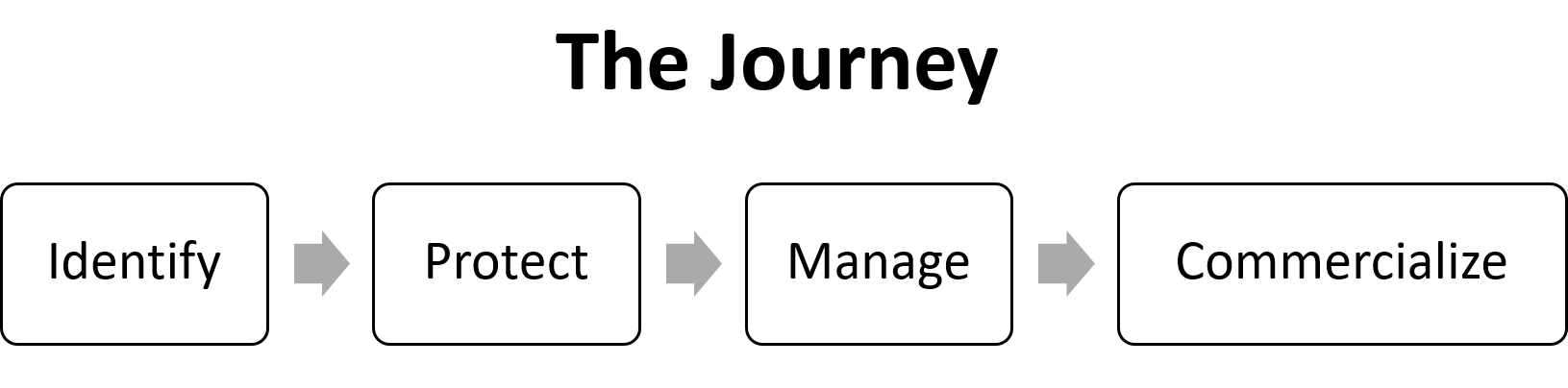
The programme is built around four practical pillars that help learners understand the full lifecycle of intellectual property. 

PILLAR 1 - IDENTIFY

PILLAR 2 - PROTECT

PILLAR 3 - MANAGE

PILLAR 4 - COMMERCIALIZE

Discover the value in what you already have. Learn to recognise, document and assess intellectual property assets within your business, organisation or area of professional practice.

  • Identify patents, trademarks, copyrights, trade secrets and industrial designs;
  • Conduct basic intellectual property audits;
  • Recognise hidden or underutilised knowledge and innovation assets;
  • Assess the strategic value of intellectual property.

Safeguard what you create. Understand the legal and strategic mechanisms available to secure intellectual property rights and reduce the risks associated with misuse, infringement or loss.

  • Understand appropriate IP protection mechanisms;
  • Navigate relevant registration processes;
  • Explore ownership, infringement and enforcement issues;
  • Develop IP protection approaches aligned with organisational or business objectives.

Make intellectual property work strategically. Develop the knowledge required to manage intellectual property assets throughout their lifecycle and integrate IP considerations into organisational decision-making.

  • Develop IP management frameworks, policies and procedures;
  • Manage and review intellectual property portfolios;
  • Monitor and maintain IP assets;
  • Align IP management with organisational strategy and risk management.

Turn intellectual property into economic opportunity. Explore ways to leverage intellectual property to generate income, build competitive advantage and support enterprise growth.

  • Evaluate IP commercialisation opportunities;
  • Explore licensing and technology transfer arrangements;
  • Develop IP-based business models;
  • Understand how innovation, creativity and knowledge assets can generate value.

4. Who Should Apply?

This qualification is designed for professionals and individuals who create, generate, manage, regulate or commercialise intellectual assets.

Entrepreneurs and SME owners:

Protect your brand, business methods, product designs and innovations while exploring opportunities to create additional value.

Software developers and technology innovators

Understand how software, designs, proprietary processes and other technological outputs may be protected and managed.

Researchers, academics and scientists:

Develop a stronger understanding of IP ownership, protection and technology transfer to help move research outputs towards practical application.

Legal practitioners and corporate legal teams:

Strengthen your practical understanding of IP registration, portfolio management, enforcement and commercial arrangements.

Marketing, branding and communications professionals:

Understand the intellectual property implications of brand development, creative content, trademarks and digital marketing assets.

Artists, authors and creative entrepreneurs:

Learn about copyright, related rights, licensing and opportunities to commercialise creative works.

Corporate executives, managers and board members:

Recognise intellectual property as a strategic organisational asset and incorporate it into governance, risk management and business growth decisions.

Sports professionals, agents and talent managers:

Explore the protection and commercialisation of image rights, branding, merchandise and other intellectual assets.

5. What Will You Study?

  • Fundamental Aspects of Intellectual Property - 15 credits
  • Complex Issues Involved in Protecting and Managing Intellectual Property Rights - 15 credits
  • Principles and Economic Value of Patents and Transfer of Technology - 25 credits
  • Fundamental Principles of National Copyright and Related Rights Protection - 20 credits
  • Regional and National Policy Options and Legal Mechanisms for the Protection of Traditional Knowledge and Traditional Cultural Expressions - 20 credits
  • Utilisation and Management of IP in Business Strategies (Commercialization) - 15 credits
  • Principal Concepts of Intellectual Property Management and Its Importance as a Spur to Human Creativity - 10 credits

Total: 120 credits at NCQF Level 5. Together, these modules provide a foundation in IP law and management, patents, copyright, traditional knowledge, technology transfer, commercialisation and the role of intellectual property in fostering creativity and economic development.

6. Practical Learning

Learn to apply knowledge, not just understand concepts. The programme incorporates practical learning activities that connect intellectual property concepts to workplace and business challenges.

  • Intellectual property case studies and scenario analysis.
  • IP audits and asset identification exercises.
  • Patent analysis and valuation-related activities.
  • Technology transfer and licensing negotiation simulations.
  • Copyright infringement and protection scenarios.
  • Traditional knowledge and cultural expression policy analysis.
  • Development of an IP action plan for business or organisational application.

The programme uses structured lectures, interactive group workshops, case studies and practical simulations. Delivery may include face-to-face or blended evening and weekend learning arrangements.

7. What Can This Qualification Help You Do?

Upon successful completion, learners will have developed knowledge and skills to support activities such as:

  • Identifying and assessing intellectual property assets;

  • Contributing to organisational IP policies and protection strategies;

  • Supporting IP portfolio management and due diligence;

  • Understanding IP-related risks and compliance considerations;

  • Contributing to licensing, technology transfer and commercialisation initiatives;

  • Advising on the strategic importance of intellectual property within their professional roles;

  • Supporting the protection of indigenous knowledge and traditional cultural expressions.

The qualification can strengthen your professional profile and support opportunities in IP management, innovation support, research commercialisation, enterprise development, brand management and related fields. Specific employment opportunities will depend on your existing qualifications, experience and the requirements of individual employers.

8. Benefits for Organisations

Invest in the people who help protect and create organisational value. For organisations, intellectual property management is not solely the responsibility of legal teams. It can affect research, product development, marketing, procurement, technology, partnerships, operations and corporate strategy.

Sponsoring employees for this qualification can help organisations build internal capability to:

  • Identify intellectual assets that may otherwise go unnoticed;
  • Improve awareness of ownership, confidentiality and IP protection;
  • Strengthen IP-related risk management and due diligence;
  • Support research, innovation and technology transfer;
  • Explore licensing and other commercialisation opportunities;
  • Integrate intellectual property into organisational strategy and growth initiatives.

SEC welcomes enquiries from organisations interested in sponsoring employees or exploring tailored corporate enrolment arrangements.


9. Entry Requirements

Applicants should prepare the following documents:
  • A certified copy of a Botswana General Certificate of Secondary Education (BGCSE) certificate or equivalent qualification.

  • A certified copy of a valid national identity card or passport.

  • Applicants are encouraged to submit complete documentation when applying.

  • There is an application fee of P100.00

10. Frequently Asked Questions

  1. Is this a recognised qualification? The Certificate V in Intellectual Property Management is accredited by the Botswana Qualifications Authority and registered at NCQF Level 5.
  2. Is this the first specialised IP programme of its kind in Botswana? It is the first specialised Intellectual Property programme to be registered on the Botswana NCQF and accredited by BQA.
  3. Do I need to be a lawyer to study this programme? No. The programme is designed for a multidisciplinary audience, including entrepreneurs, researchers, technology professionals, executives, creatives and other professionals who work with intellectual property assets.
  4. Is the programme theoretical or practical? It combines foundational knowledge with practical case studies, scenario-based assessments, workshops and applied activities relating to IP protection, management and commercialisation.
  5. Can my employer sponsor me? Yes. Individuals may approach their employers about sponsorship, and organisations can contact SEC to discuss enrolment for their staff.
  6. When is the next intake? The next intake is in January. Applications are open now.


APPLY TODAY. BUILD YOUR IP CAPABILITY. UNLOCK THE VALUE OF INNOVATION.